

 When PDR Works, When It Doesn’t, and Why Modern Cars Change the Rules
Paintless Dent Repair (PDR) has earned a strong reputation in the auto body world—and for good reason. When conditions align, PDR restores panels quickly, preserves factory paint, and keeps repair costs down. That reputation, however, often leads drivers to assume PDR solves every dent problem.
At DG Collision Center, we see the full picture. PDR works beautifully in the right situations. In others, it creates unrealistic expectations that lead to disappointment, delays, or repeated repairs. Understanding how PDR actually works—and how modern vehicle design affects it—helps drivers make smarter decisions after minor damage.
What Paintless Dent Repair Really Does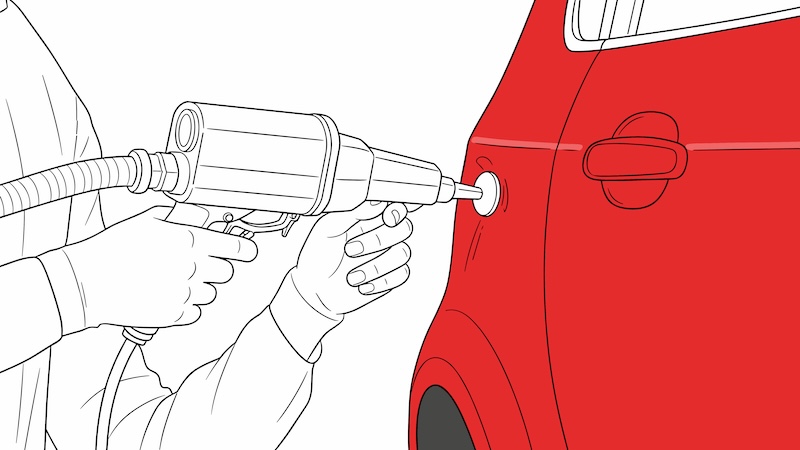
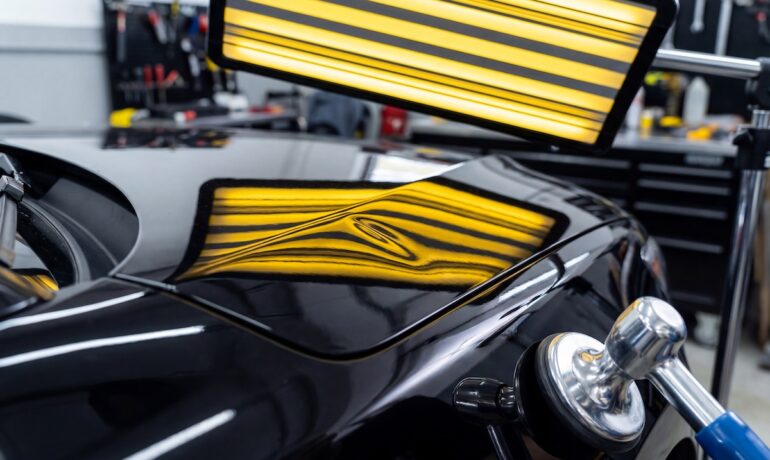
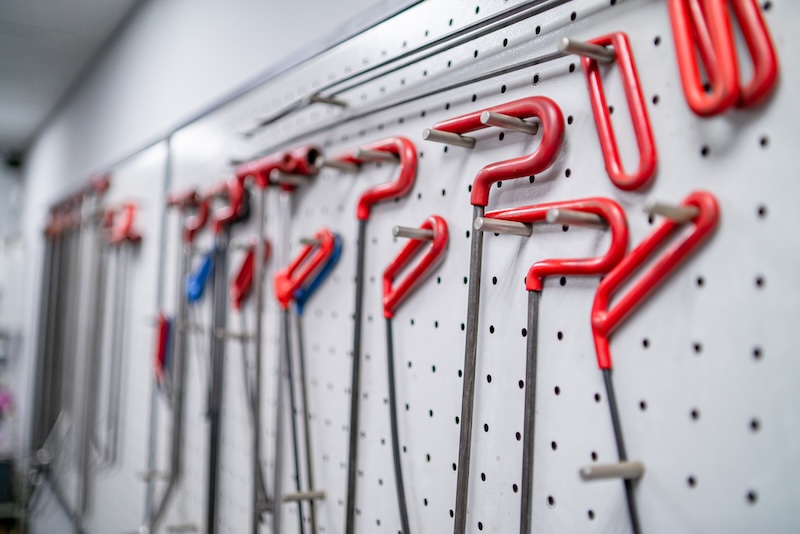
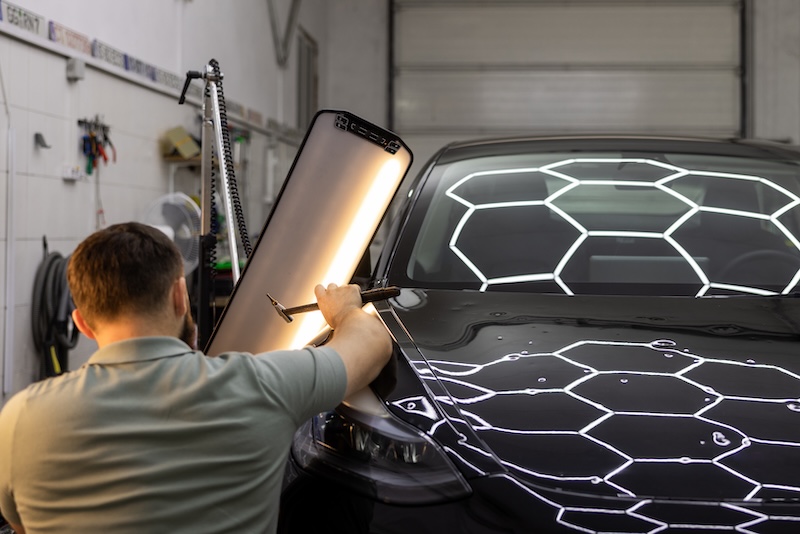
Paintless Dent Repair reshapes metal panels without sanding, filling, or repainting. Technicians use specialized tools to access the back side of a panel and gently massage the metal back into position. When performed correctly, the repair leaves the original paint intact and invisible.
This process protects:
- Factory paint quality
- Original corrosion resistance
- Vehicle resale value
PDR excels at small-to-medium dents where the metal stretches but does not crease or crack.
Why Factory Paint Matters More Than Ever
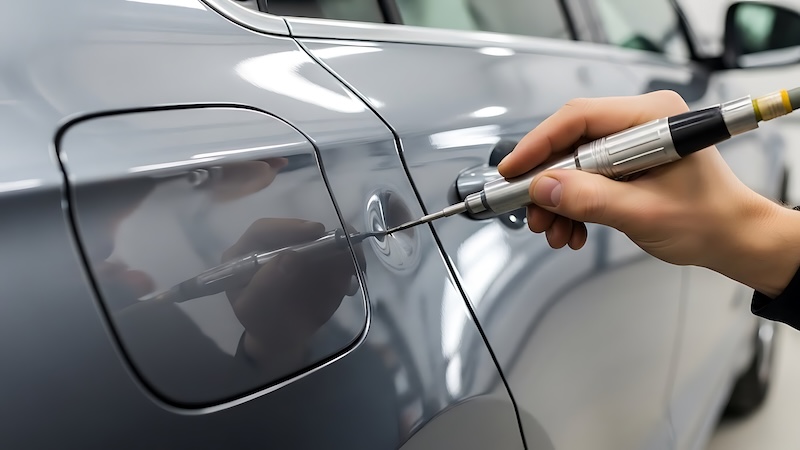 Modern automotive paint systems deliver durability that aftermarket paint cannot always replicate. Factory finishes include baked-on coatings applied under tightly controlled conditions. Even excellent repainting introduces slight variations in texture and thickness.
Because PDR preserves factory paint, it avoids:
- Color-matching challenges
- Clear coat blending issues
- Future peeling or fading risks
For vehicles with high-end finishes or metallic colors, paint preservation adds real long-term value.
The Myth: “Any Dent Can Be Fixed with PDR”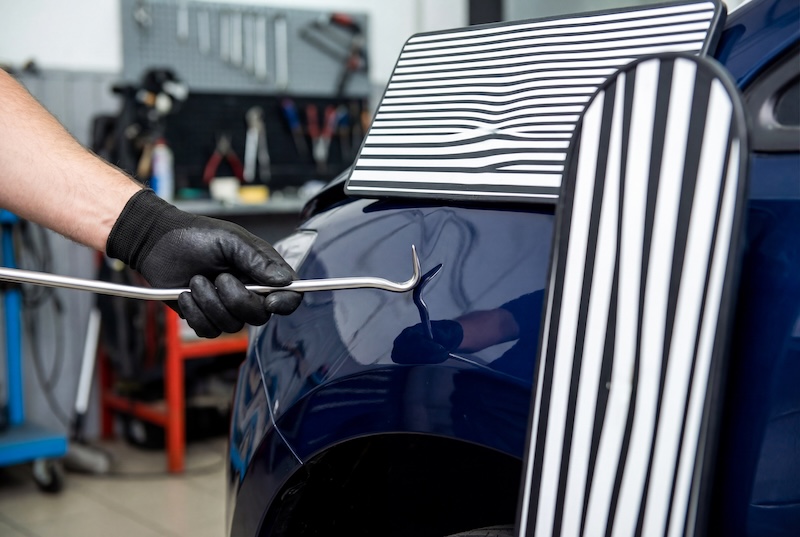
This assumption causes more confusion than almost anything else related to dent repair. While PDR handles many dents well, it does not apply universally.
PDR struggles or fails when:
- Paint cracks or chips
- Metal stretches beyond elastic limits
- Sharp creases form along body lines
- Panels sustain edge or corner damage
- Structural components shift
In these cases, traditional repair methods provide a safer and more reliable outcome.
Modern Vehicle Design Has Changed PDR Limits
 Ten years ago, steel dominated most body panels. Today’s vehicles use a mix of high-strength steel, aluminum, and complex alloys designed for safety and efficiency.
These materials behave differently during impact:
- Aluminum resists reshaping and work-hardens faster
- High-strength steel retains dents more aggressively
- Thinner panels show distortion more easily
Some dents that once qualified for PDR now require conventional repair due to how modern materials respond.
Sensors, Cameras, and Electronics Add Complexity
 Modern vehicles pack advanced driver-assistance systems (ADAS) behind exterior panels. Even a minor dent may sit near:
- Blind-spot sensors
- Parking sensors
- Lane-assist cameras
- Radar modules
While PDR avoids paintwork, technicians must still protect and recalibrate nearby systems. A dent repair that ignores sensor alignment can compromise safety features, even if the panel looks perfect afterward.
Hail Damage: PDR’s Strongest Use Case
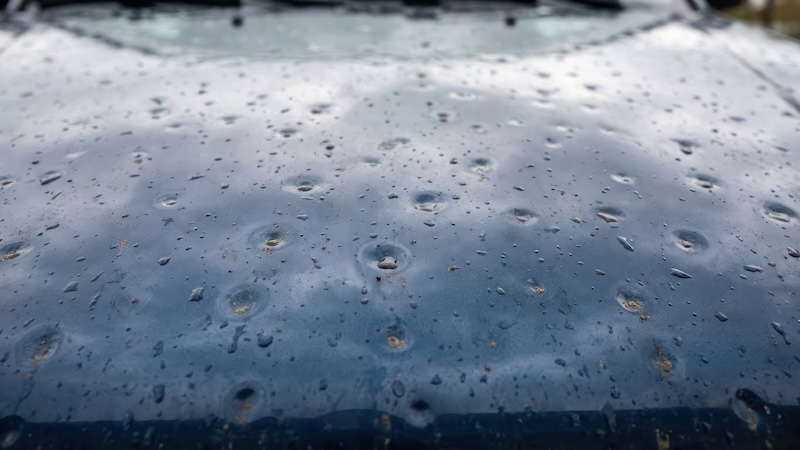
Damage resulting from hail remains one of PDR’s best applications. Most hail dents involve shallow impacts across accessible panels with intact paint.
PDR works especially well for:
- Hood and roof dents
- Trunk lid damage
- Multiple small impacts
That said, hail repair still requires experience. Improper tool pressure can leave subtle distortions visible under certain lighting angles.
 Door Dings vs. Parking Lot Damage
Not all parking lot dents behave the same way. A soft door ding in the middle of a panel often responds well to PDR. Damage near reinforcement beams, door edges, or body creases presents more risk.
The location matters as much as the size of the damage.
When PDR Saves Money—and When It Doesn’t
PDR often costs less than traditional repair because it eliminates paint materials and curing time. However, forcing PDR onto borderline damage can backfire.
If PDR cannot fully restore panel shape, the vehicle may later require:
- Conventional body repair
- Panel replacement
- Paint correction
That sequence costs more than addressing the damage properly from the start.
Blending PDR with Traditional Repair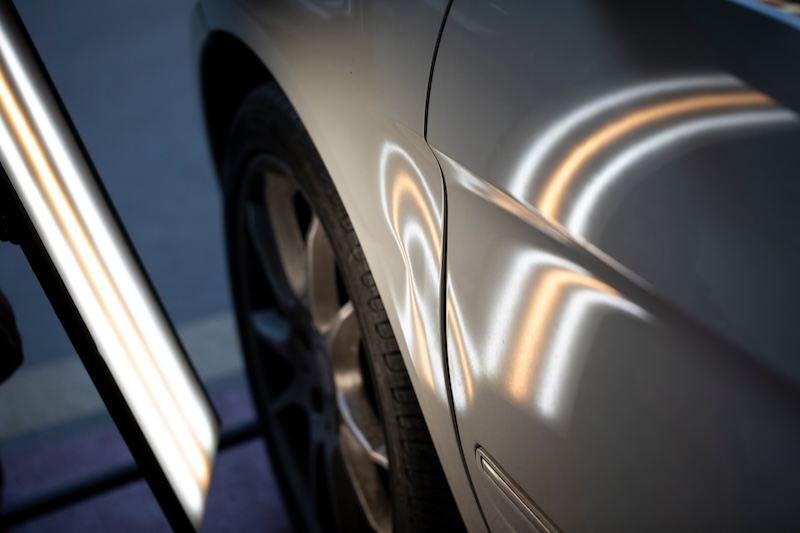
In many cases, the smartest solution combines PDR with light refinishing. Skilled technicians may use PDR techniques to minimize filler depth before completing a conventional repair. This hybrid approach:
- Preserves panel integrity
- Reduces filler use
- Improves long-term durability
Not every dent demands an all-or-nothing approach.
Why Experience Matters More Than the Toolset
PDR tools do not guarantee results. Technician experience determines whether a dent disappears or remains faintly visible. Lighting angles, panel tension, and paint flexibility all influence outcomes.
A proper evaluation considers:
- Panel material
- Dent depth and shape
- Paint condition
- Access points
- Vehicle safety systems
Skipping that assessment leads to unrealistic promises.
Making the Right Repair Decision
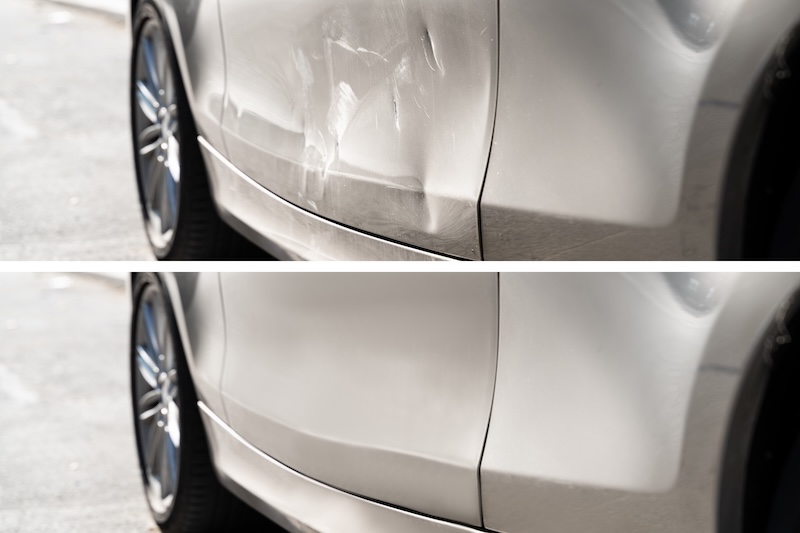 Paintless Dent Repair offers real benefits when used correctly. It protects factory paint, speeds up repairs, and controls costs. It does not replace traditional auto body repair in every situation.
The best results come from honest evaluation, not shortcuts.
If a dent looks small but sits in the wrong location—or affects modern safety systems—traditional repair protects both appearance and function. You can trust the pros at DG Collision Center to provide a thorough examination and recommend the right solution.
About DG Collision Center, an Auto Body Shop in Covina, California
We would love to help restore your vehicle following a car accident or comprehensive damage. DG Collision Center in Covina, California is your one-stop shop for auto body repair after car accidents. Our highly trained team includes specialized technicians who handle everything from paintless dent repair to full collision restoration. We work directly with all insurance companies, allowing customers to file claims without needing to be present. At DG Collision Center, we take pride in delivering excellent service, honest evaluations, and repairs that protect your vehicle’s safety, value, and appearance.